 Alious
The controversial decision to disallow Brennan Johnson’s goal for Everton against Hull City has reignited a fierce debate about the interpretation of football’s offside law, with former PGMOL chief Keith Hackett reportedly questioning whether the rules have become unnecessarily complicated.
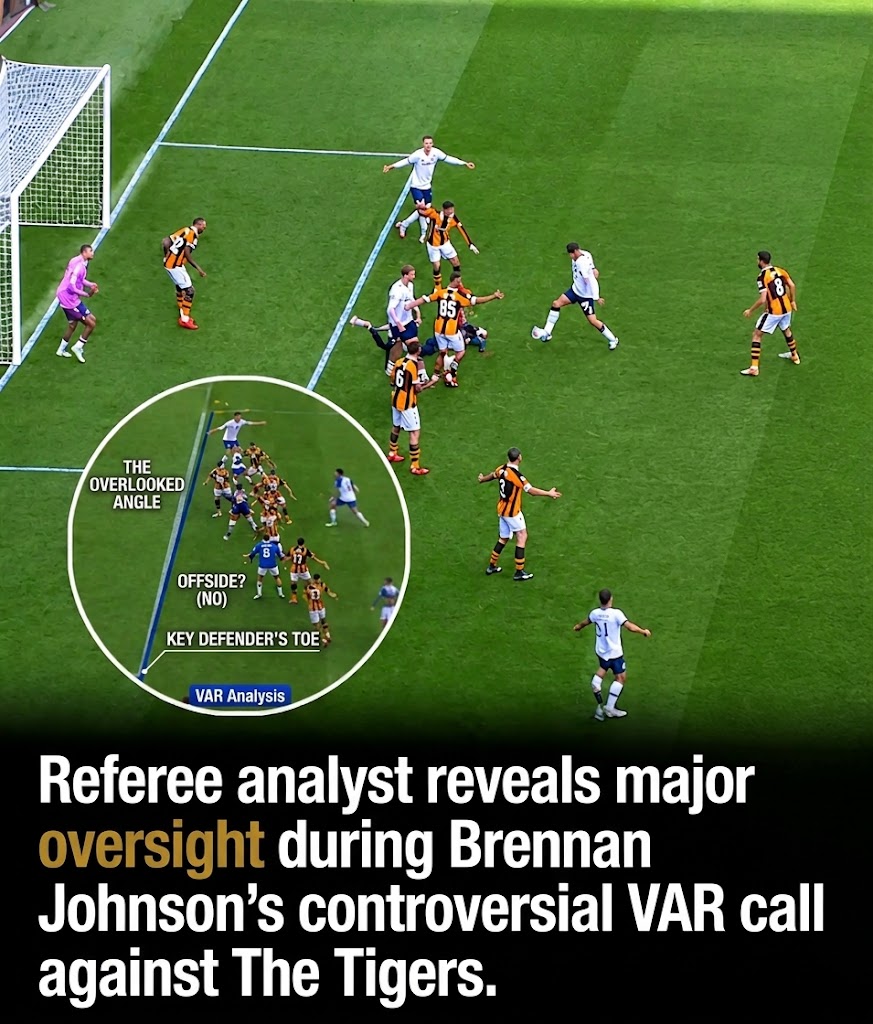
Everton’s dramatic 2-2 draw at the MKM Stadium was overshadowed by the incident, which saw referee Michael Salisbury reverse his initial decision to award Johnson a goal following a Video Assistant Referee (VAR) review. The decision immediately attracted criticism and left Everton manager David Moyes demanding a clearer explanation of the officials’ reasoning.
While some former referees have defended the intervention, Hackett has reportedly argued that the situation would have been handled differently during his time as an official. His comments have added another layer to an already heated discussion about how referees determine whether an attacking player in an offside position has interfered with an opponent.
The controversy has raised an important question: has football’s offside law become so complicated that even experienced officials struggle to agree on how it should be applied?
😱 THE VAR INCIDENT THAT LEFT EVERTON FUMING
The controversy unfolded in the 34th minute of Everton’s encounter with Hull City when Johnson appeared to put the visitors ahead.
The forward found the net after Harrison Armstrong’s effort had been blocked, prompting celebrations among Everton players and supporters who believed their team had taken a crucial lead.
Initially, the goal was allowed to stand. However, the situation was subsequently examined by VAR, and referee Michael Salisbury was advised to review the footage on the pitchside monitor.
After assessing the incident, Salisbury overturned his original decision and ruled out the goal, with Johnson penalised for being in an offside position and challenging an opponent for the ball.
The reversal sparked immediate frustration among Everton supporters, particularly because the goal could have given Moyes’ side an important advantage in a competitive away fixture.
For Hull City, the decision removed the prospect of falling behind and allowed the home side to continue the contest without conceding.
However, the central issue was not simply whether Johnson had been standing in an offside position. The real question concerned whether his movement and involvement in the incident affected a Hull defender sufficiently to constitute an offence.
That distinction is crucial under the current Laws of the Game.
A player can occupy an offside position without automatically committing an offence. The situation changes when that player becomes involved in active play through one of the actions specified in the rules, including interfering with an opponent.
It was the interpretation of that involvement that ultimately determined Johnson’s fate.
🚨 KEITH HACKETT QUESTIONS THE COMPLEXITY OF THE OFFSIDE LAW
Former PGMOL chief and ex-FIFA referee Keith Hackett has reportedly expressed serious concerns about the way the offside law was interpreted during the incident.
Hackett was quoted as saying:
“In my day, Brennan Johnson’s goal would have counted.”
His assessment suggests that he believes the current interpretation places too much emphasis on distinguishing between different phases of an attacking move.
According to Hackett, the officials needed to consider whether an attempt to play the ball had changed the circumstances of the incident and whether Johnson’s subsequent movement should have been treated as an offence.
He reportedly explained:
“The actual phase, I think, because there’s an attempt to play the ball, you’ve effectively negated the situation in terms of him becoming active. The first lot is the first phase of play, then the second phase is why he’s being given offside, and this is the complexity of the law.”
Hackett acknowledged that Johnson was in an offside position but questioned whether the decision to penalise him was justified under the interpretation he would have applied.
He was also quoted as saying:
“Yes, he is in an offside position, so he’s committed an offence. I think the movement makes him active. In my day, we’d have just pointed to the middle and given the goal.”
His comments highlight the difference between identifying an offside position and establishing whether a player has committed an offside offence.
Under the modern interpretation, merely standing beyond the second-last opponent when the ball is played is not enough to warrant a decision against an attacker. The player must also become involved in the action in a manner covered by the law.
That involvement can include challenging an opponent for the ball, even when the attacker does not make contact with it.
Hackett’s main concern appears to be the difficulty of applying these distinctions consistently and explaining them clearly to the public.
He reportedly continued:
“And I think this is the over-complexity of the offside law. That makes it very difficult for my officials and certainly for fans to understand. It’s a mess, isn’t it? Let’s face it, he is stood miles offside. I think that law is overcomplicated.”
The former refereeing chief’s criticism has therefore shifted attention beyond the individual incident and towards the broader question of whether football’s offside regulations need to become simpler.
⚽ WHAT THE PREMIER LEAGUE REPORTEDLY SAID ABOUT THE DECISION
Despite Hackett’s objections, the reported explanation from the Premier League Match Centre indicated that the officials believed the decision was consistent with the existing rules.
The explanation reportedly stated:
“After VAR review, the referee overturned the original decision of goal to Everton – with Johnson in an offside position and deemed to be challenging an opponent for the ball.”
The referee’s explanation was also reportedly captured through the officials’ communication system.
“Everton No.22 is in an offside position and challenges Hull No.3. Final decision is offside.”
The explanation identifies Johnson’s challenge against Hull defender Ryan Giles as the decisive factor.
In other words, the officials did not disallow the goal simply because Johnson was in an offside position. Their reasoning was that his actions brought him into active involvement by challenging an opponent for the ball.
Under the Laws of the Game, an attacker in an offside position can be penalised for interfering with an opponent by challenging them for possession or otherwise affecting their ability to play the ball.
Contact with the ball is not always necessary for such an offence to occur.
The decision therefore required the referee to make a judgment about Johnson’s involvement rather than merely establish his position on the pitch.
This distinction explains why the incident has generated such disagreement.
Supporters can accept that Johnson was in an offside position while questioning whether he genuinely interfered with Giles. Equally, officials who believe the challenge affected the defender can argue that the decision was justified under the existing regulations.
The reported Premier League explanation supports the reasoning behind the decision, but it has not eliminated the wider debate about whether the law is too complicated.
😡 DAVID MOYES DEMANDS ANSWERS AFTER THE GOAL IS DISALLOWED
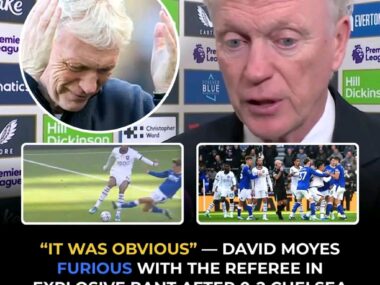
Everton manager David Moyes was reportedly left frustrated by the decision and questioned the terminology used to explain it.
The experienced manager was quoted as saying:
“Subjective offside, I think is the word. Which I don’t know what that actually means.”
Moyes continued:
“I don’t know what subjective offside is, and I don’t think any of you do either.”
His comments reflected the confusion surrounding decisions that require referees to judge whether a player’s actions have interfered with an opponent.
Unlike a straightforward offside decision based on the position of an attacker, this type of incident requires an assessment of movement, proximity and involvement in the play.
Moyes also reportedly requested further clarification about the review process.
“But I’d like to see the lines drawn just to see exactly if they’ve got it right. I hope they’ve put the lines on and done it correctly.”
For a manager, having a goal overturned can be particularly frustrating when the team believes it has scored legitimately.
A goal can change the momentum of a match, influence tactical decisions and place additional pressure on the opposition. Consequently, decisions of this nature often attract intense scrutiny.
However, VAR is designed to assist officials in reviewing potential errors, not to guarantee that every decision will be universally accepted.
Where the law requires a subjective judgment, disagreements can persist even after the footage has been examined.
Moyes’ reaction has therefore become another important part of the controversy, with the Everton manager questioning not only the outcome but also the clarity of the explanation.
👀 DARREN CANN BACKS THE OFFICIALS AND DEFENDS THE VAR REVIEW
Hackett’s criticism has not been shared by every former official.
Former Premier League assistant referee Darren Cann has reportedly defended the decision to disallow Johnson’s effort, describing it as an excellent and correct intervention by VAR official Tim Wood.
Cann’s argument focused on Johnson’s involvement in the incident and his challenge against Hull defender Ryan Giles.
He reportedly explained:
“Johnson then challenged Hull City’s Ryan Giles and therefore in law was interfering with an opponent.”
This interpretation supports the view that Johnson’s actions were sufficient to constitute an offside offence.
Under the current regulations, an attacker can be penalised for challenging an opponent for the ball while in an offside position. The decision does not necessarily depend on whether the attacker eventually touches the ball.
Cann’s assessment therefore places the emphasis on the nature of Johnson’s involvement rather than on whether he made the final contact.
His reported comments demonstrate why the incident has divided opinion among experienced refereeing figures.
While Hackett has questioned the complexity of the law and suggested that the goal would have stood under the interpretation he previously applied, Cann believes the intervention was justified by the existing rules.
It is important, however, to separate two questions.
The first is whether the referee applied the current law correctly. The second is whether the law itself is sufficiently clear and straightforward.
Someone can defend a decision under the existing regulations while still recognising that the regulations may be difficult for supporters to understand.
Equally, criticism of the law does not automatically prove that the referee made an incorrect decision.
That distinction is central to the ongoing discussion surrounding Johnson’s disallowed goal.
🔍 MARK CLATTENBURG OFFERS ANOTHER EXPLANATION
Former referee Mark Clattenburg has reportedly offered a further explanation of the incident, focusing on how an attempt to play or save the ball can affect the interpretation of an offside phase.
Clattenburg was quoted as saying:
“Under the laws of the game, a save is still classed in the phase of an offside. Johnson was in the act of challenging for the ball with the Hull defender. He was close enough to challenge for the ball.”
His assessment supports the argument that Johnson’s involvement could be penalised if it satisfied the requirements for interfering with an opponent.
The offside law requires officials to consider more than the location of an attacker when the ball is played. They must also establish whether the player subsequently becomes involved in active play through an action covered by the regulations.
This can become particularly difficult when several players are competing for the same ball in a crowded penalty area.
A defender may attempt to intercept or play the ball while an attacker in an offside position moves towards the same action. The referee must then determine whether that attacker’s involvement crosses the threshold for an offence.
In Johnson’s case, the reported explanation was that his challenge against Giles was enough to make him actively involved while in an offside position.
Clattenburg’s reported comments consequently provide another argument in support of the officials’ interpretation.
Nevertheless, his explanation does not resolve the broader disagreement over whether the rules are too complicated or whether similar incidents are being interpreted consistently.
⚖️ WHY FOOTBALL’S OFFSIDE RULE CONTINUES TO CAUSE CONTROVERSY
The dispute involving Johnson illustrates one of the most challenging aspects of modern football officiating.
The difference between being in an offside position and committing an offside offence is fundamental to understanding the rules.
An attacker can be standing beyond the second-last opponent when a teammate plays the ball without automatically being penalised. The player must also become involved in active play in a way that meets the requirements of the law.
One of the ways this can happen is by interfering with an opponent.
That may involve challenging an opponent for the ball or taking an action that affects their ability to play it.
The difficulty arises when officials must decide whether the attacker’s movement genuinely affected the defender.
Such assessments can depend on the players’ positions, their movements, their proximity to the ball and the circumstances surrounding the challenge.
VAR can provide different camera angles and allow the referee to examine the incident more closely. However, reviewing footage does not eliminate the need for interpretation when the law requires a subjective assessment.
This is why Hackett’s criticism has attracted attention.
His argument concerns more than one disallowed goal. It raises questions about whether the wording and practical application of the law have become unnecessarily difficult for officials, players, managers and supporters to follow.
The disagreement between Hackett, Cann and Clattenburg also demonstrates that experience alone does not guarantee unanimous agreement over every controversial decision.
Some former officials believe the incident was handled correctly under the current rules, while others have questioned the complexity of the interpretation.
For supporters, the challenge is understanding why a goal that initially appears legitimate can subsequently be ruled out after a lengthy review.
Clearer explanations could help bridge that gap, particularly when a decision depends on interference with an opponent rather than an easily identifiable offside position.
💔 HOW THE CONTROVERSY AFFECTS EVERTON
Johnson’s disallowed goal became one of the major talking points following Everton’s 2-2 draw against Hull City.
The visitors ultimately had to settle for a share of the points, with the controversial decision adding to the post-match discussion surrounding their performance.
Kiernan Dewsbury-Hall reportedly contributed a goal and an assist, while missed opportunities and defensive mistakes also featured in the assessment of the match.
Although the disallowed effort attracted considerable attention, it would be unfair to suggest that the final result was determined entirely by that incident.
Football matches are shaped by multiple moments, including attacking opportunities, defensive decisions and the ability to maintain concentration throughout the contest.
Nevertheless, the controversy has given Everton supporters another reason to question the consistency and clarity of Premier League officiating.
For Moyes, the immediate priority will be to ensure his team learns from the match and continues to improve its performances.
The manager will also want his players to remain focused on the football rather than allow frustration over refereeing decisions to overshadow their work on the pitch.
For the Premier League, however, the incident reinforces the importance of communicating difficult decisions clearly.
When a goal is overturned, supporters want to understand precisely what the officials saw, which part of the law was applied and why the player’s actions were considered an offence.
Simply stating that an attacker challenged an opponent may explain the decision’s basis, but it might not satisfy those who remain unconvinced that the challenge genuinely interfered with the defender.
That is where the debate over the law’s complexity becomes particularly relevant.
🚨 THE FINAL VERDICT: WAS BRENNAN JOHNSON’S GOAL WRONGFULLY DISALLOWED?
Brennan Johnson’s disallowed goal against Hull City has reignited the debate over how football’s offside law should be interpreted.
Keith Hackett has reportedly argued that the regulations have become unnecessarily complicated and suggested that the goal would have been awarded under the interpretation he used during his refereeing career.
However, the Premier League’s reported explanation stated that Johnson was in an offside position and challenged an opponent for the ball.
Darren Cann has reportedly supported the VAR intervention, while Mark Clattenburg’s explanation has also highlighted the importance of assessing an attacker’s involvement in the play.
Meanwhile, David Moyes’ reaction has underlined the frustration that can arise when managers struggle to understand the terminology used to justify a decision.
Ultimately, the central issue is whether Johnson’s challenge against Ryan Giles met the criteria for interfering with an opponent under the current Laws of the Game.
The fact that the incident has generated conflicting assessments from former officials demonstrates how difficult these situations can be to interpret.
Was the referee right to disallow the goal, or has football’s offside law become unnecessarily complicated?
Everton supporters will undoubtedly have their own opinions, and the debate is unlikely to disappear quickly.
Share your verdict in the comments: SHOULD BRENNAN JOHNSON’S GOAL HAVE STOOD, OR DID VAR GET THE DECISION RIGHT? 👇⚽

 Alious