 Alious
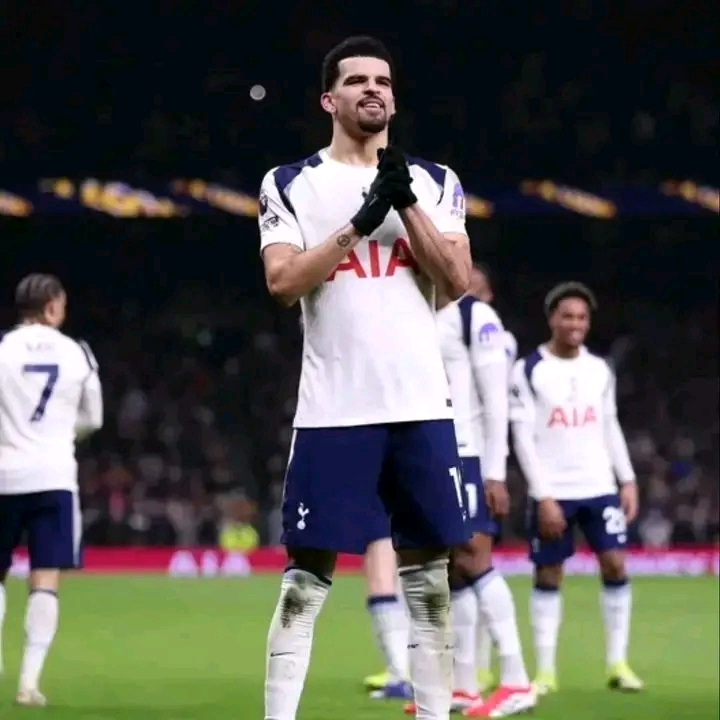
Tottenham Hotspur striker Dominic Solanke has delivered a candid assessment of his side’s performance, admitting that a lack of composure in front of goal continues to haunt the team. Despite believing that Spurs controlled much of the first half, the forward acknowledged that their inability to convert promising opportunities into goals prevented them from securing the result they wanted.
Solanke did not attempt to hide his disappointment when reflecting on the missed chances, suggesting that Tottenham had enough opportunities to make a much bigger impact on the contest. His comments painted a picture of a team capable of creating openings but still struggling to deliver the decisive finishing required to turn dominance into victories.
For the Tottenham supporters watching their team battle for a positive result, the striker’s assessment will likely resonate with a familiar frustration. Controlling possession and creating opportunities are important aspects of football, but those qualities count for little when a team repeatedly fails to take advantage of its best moments.
The forward’s reaction also highlighted his personal disappointment, particularly because he believes he could have left the pitch with three goals to his name.
SOLANKE IDENTIFIES A FAMILIAR PROBLEM FOR TOTTENHAM
Reflecting on the match, Solanke acknowledged that Tottenham failed to make the most of their first-half opportunities.
The striker’s assessment suggested that the team had placed themselves in promising positions but lacked the clinical finishing necessary to punish their opponents. Rather than converting their attacking pressure into a comfortable advantage, Spurs allowed the contest to remain open.
For Solanke, the problem extends beyond a single afternoon. His comments indicated that Tottenham’s difficulties in front of goal have become a recurring theme, with missed chances continuing to undermine performances that might otherwise produce better results.
In modern football, teams often spend considerable time working on their attacking patterns, movement, and ability to create space around the opposition’s penalty area. However, the final action remains crucial. A perfectly constructed move can become meaningless if the resulting opportunity is wasted.
Tottenham appear to have encountered precisely that challenge in this contest.
The striker’s honest admission could therefore be interpreted as an acknowledgment that creating chances is only part of the job. Spurs must also develop the composure and precision needed to turn those openings into goals, particularly when matches are closely contested.
Failing to do so can leave a team vulnerable to dropped points, even when its overall performance suggests that it deserved more.
‘I SHOULD HAVE SCORED THREE GOALS’ — STRIKER REFLECTS ON MISSED OPPORTUNITIES
Solanke was particularly critical of his own performance when discussing the chances he failed to convert.
The Tottenham forward expressed the belief that he had done enough to put himself in positions where he could have scored repeatedly, admitting that a hat-trick was within reach.
His reflection demonstrated the disappointment of a striker who knows that the smallest details can determine the outcome of a match. For players operating at the highest level, opportunities to score are not always guaranteed, making it essential to take advantage of them when they arise.
Solanke’s admission also revealed that he was judging his display against the standards he expects of himself.
Strikers are frequently assessed according to their goal contributions, but their own evaluation can be even more demanding. A forward may contribute to the team’s attacking play, occupy defenders effectively, and help create space for teammates while still leaving the pitch frustrated by missed opportunities.
That appeared to be the case for Solanke.
His suggestion that he could have scored three times indicates that he recognised opportunities to make a decisive difference. Rather than celebrating the chances he helped create, he was left considering how the final result might have changed had he been more ruthless.
For Tottenham, that is an important distinction. When a striker acknowledges that he could have delivered more, it demonstrates an awareness of the responsibility that comes with leading the attack.
However, the real test will be whether that disappointment translates into sharper performances in subsequent matches.
Solanke will know that reflecting on missed chances is only the beginning. The ultimate objective is to ensure that similar opportunities are converted when Tottenham need goals most.
FIRST-HALF DOMINANCE WITHOUT THE REWARD
Another significant aspect of Solanke’s reaction was his belief that Tottenham had controlled the opening period.
The striker felt that his team had enjoyed a strong first half and had done enough to put their opponents under pressure. Nevertheless, the absence of clinical finishing prevented Spurs from turning that superiority into the advantage they might have expected.
Such situations can be particularly frustrating for a team because they create a sense of unfinished business.
When players dominate possession, move the ball effectively, and repeatedly approach the opposition’s goal, they naturally expect their efforts to produce something tangible. If the opportunities go begging, the opposition remains in the contest and can grow in confidence.
Tottenham were unable to fully capitalise on their positive spells, leaving Solanke to reflect on what might have been.
The forward’s assessment also underlined an important lesson about football: dominance must be measured by more than the amount of possession a team enjoys or the number of attacks it produces.
The most decisive statistic is often the scoreline.
A side can enjoy long periods of control and still fail to win if it cannot turn promising positions into goals. Meanwhile, an opponent that creates fewer opportunities may remain dangerous if it is more efficient in the final third.
For Spurs, the challenge is to combine their ability to control matches with the ruthless execution required to secure three points.
Solanke’s comments suggest that he understands the importance of that balance.
TOTTENHAM ACCEPT THE POINT BUT KNOW MORE WAS POSSIBLE
Despite his disappointment, Solanke acknowledged that Tottenham would have to accept the point they collected.
His reaction suggested a degree of realism about the situation. Although he believed Spurs had performed well during the opening half, he recognised that the final outcome was something the team would have to live with.
In a demanding Premier League campaign, every point can become important. A draw may not always represent the result a team wanted, but it can still provide something to build upon, depending on the circumstances of the match.
Nevertheless, Solanke’s words made it clear that Tottenham should not ignore the opportunities they failed to take.
Accepting a point does not mean pretending that everything went perfectly. Instead, the team must identify the shortcomings that prevented a better result and work towards correcting them.
For the attacking players, that means improving their decision-making in dangerous areas, remaining composed under pressure, and making sure that promising chances are not wasted.
For the coaching staff, it means finding ways to ensure that the team’s attacking work produces more consistent rewards.
The objective is straightforward: Tottenham must become more efficient in front of goal if they want their performances to translate into stronger results.
SOLANKE’S HONEST ASSESSMENT SENDS A MESSAGE TO SPURS
Solanke’s post-match reaction offered a revealing glimpse into the frustration within Tottenham’s attacking department.
His comments were not simply about one missed opportunity or one disappointing moment. They highlighted a broader concern about the difference between playing well and producing the goals required to win football matches.
The striker’s willingness to acknowledge his own shortcomings could prove important. Rather than placing all the responsibility elsewhere, he recognised that he personally could have done more to change the outcome.
That attitude gives him a clear target for improvement.
Tottenham will need their forwards to demonstrate greater composure in the penalty area, particularly during matches in which the team creates several promising openings. Converting those opportunities can change the entire complexion of a contest, allowing Spurs to protect leads, control the tempo, and put opponents under greater pressure.
Ultimately, Solanke’s message was one of disappointment mixed with determination.
He believed Tottenham had dominated important periods of the match, yet he also recognised that their failure to finish clinically had prevented them from achieving more.
The point may have to be accepted, but the missed chances cannot simply be forgotten.
For Solanke, the immediate challenge is to turn his frustration into goals. For Tottenham, the priority is to make sure that promising performances are rewarded with victories rather than leaving players wondering what might have happened if they had been more clinical.
The verdict is clear: Tottenham may have created enough opportunities to secure a better result, but Solanke knows that opportunities alone are not enough. Spurs must start converting their chances if they want to turn encouraging spells of football into the wins their supporters expect.


 Alious