 Alious
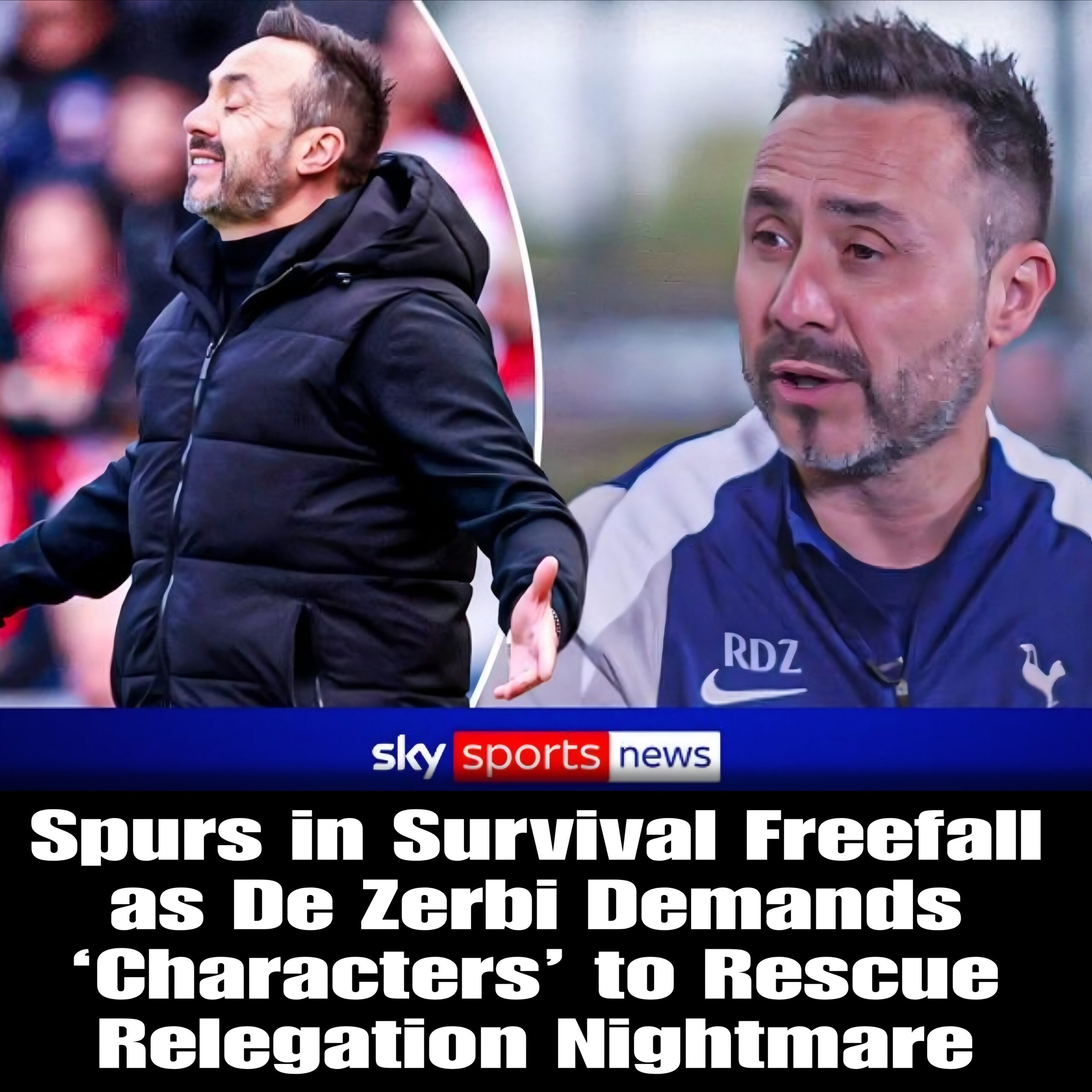
Roberto De Zerbi has admitted there is no longer time to properly diagnose Tottenham Hotspur’s deepening crisis, insisting the only way forward is for his players to immediately step up and show character in a desperate relegation battle.
The Tottenham manager, who took charge on a five-year deal amid questions over long-term commitment if the club were to drop down a division, has stressed that unity—not league status—is what will define his future at the club.
De Zerbi made it clear in his first major interview after arriving that he intends to remain in charge “no matter what,” including in the event of relegation. However, he quickly clarified that his continuation is not tied to division status but to alignment within the club structure. “The problem is not the league,” he explained. “The problem is to keep the relationship with the board and to have the same ideas in the project.”
Pressed further on whether his future truly hinges on that internal harmony rather than Premier League survival, he reiterated: “Yes. Everyone on the same page.”
Crisis deepens after bleak start
De Zerbi’s tenure has begun in the worst possible fashion, with a 1–0 defeat to Sunderland leaving Spurs in the bottom three. With just six matches remaining, they sit two points from safety and remain the only Premier League side yet to register a win in 2026.
Despite the alarming position, the Italian coach has urged calm focus on immediate results rather than long-term reflection, insisting there is “no time to lose” in addressing structural issues mid-season.
“We have no time to understand the problems we have this season,” he said. “We have to be focused just on the next game.”
Leadership vacuum exposed
With defensive leader Cristian Romero ruled out for the remainder of the campaign, Spurs’ lack of experienced voices has become even more apparent. De Zerbi acknowledged the squad’s fragility but insisted leadership can come in multiple forms, not just through the captaincy.
He called on players such as Micky van de Ven, Rodrigo Bentancur, João Palhinha, Dominic Solanke, and Xavi Simons to assume greater responsibility in different phases of the game—whether through organisation, composure, or technical influence.
“There are a lot of different types of leader,” he said. “A leader with the ball, a leader in tough moments, a leader who helps his teammates. We need all of them.”
However, he also issued a blunt warning about selection: “If you don’t have character, you won’t play.”
Squad unity under pressure
In an attempt to strengthen group cohesion, De Zerbi has already taken the squad out for a team dinner, emphasising the need to build relationships quickly in a season that is rapidly slipping away.
He admitted part of his focus must shift from tactical overhaul to understanding his players on a deeper level. “I have to get to know my players better and better every week,” he said.
His comments reflect a manager attempting to impose identity and discipline in a squad widely described as one of the youngest in the Premier League, and therefore lacking proven survival experience.
Brighton test looms large
De Zerbi now faces an immediate emotional and tactical test as Spurs host Brighton—his former club—in a crucial fixture that could temporarily lift them out of the relegation zone depending on other results.
A win would offer brief relief before rival fixtures later in the weekend, but anything less would deepen fears that Tottenham’s season is drifting toward catastrophe.
For De Zerbi, the message remains consistent: survival will not be achieved through analysis or reputation, but through personality, unity, and players willing to shoulder responsibility when it matters most.

 Alious