 Alious
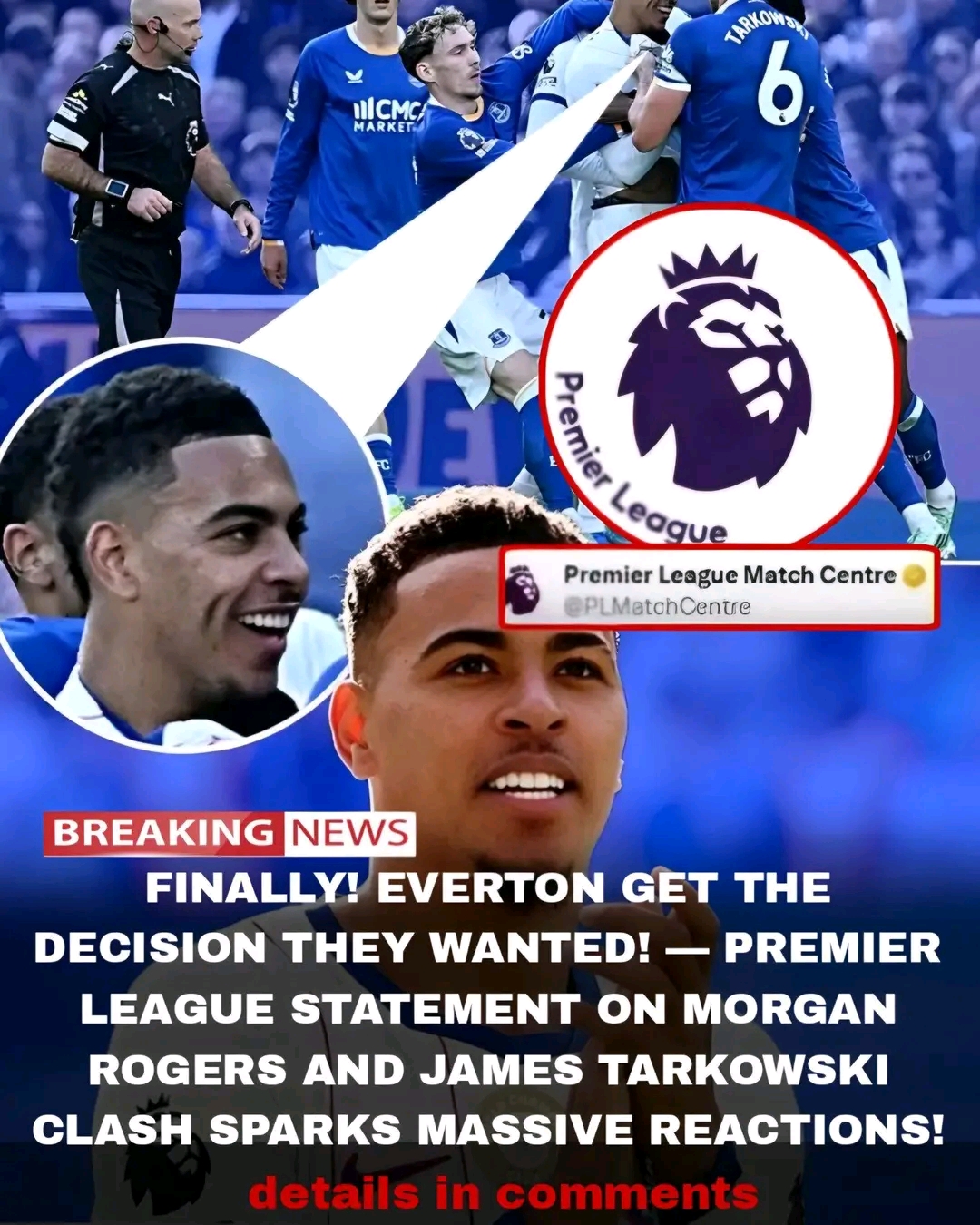
Everton’s meeting with Chelsea may have ended in a 2–0 defeat for the Merseyside club, but the heated confrontation involving Morgan Rogers and James Tarkowski has continued to attract attention long after the final whistle.
The incident has generated considerable debate among supporters, with questions being raised about player discipline, accountability and whether similar situations are treated consistently throughout the Premier League.
Claims circulating about the incident suggest that Rogers could face a two-match suspension and be required to issue a public apology to Tarkowski. However, these details should not be treated as an official Premier League decision without confirmation from the league or another authoritative source.
Nevertheless, the controversy has reignited a familiar argument among football supporters: should a player’s reputation, status or club influence how disciplinary incidents are assessed?
For Everton fans, the issue goes beyond the result against Chelsea. They want to see incidents involving their players examined fairly, with the same standards applied regardless of the identity of those involved.
🔥 HOW THE TARKOWSKI AND ROGERS CONFRONTATION BECAME A MAJOR TALKING POINT
Everton’s encounter with Chelsea was an intense contest, with both teams competing fiercely as the match unfolded.
Chelsea eventually secured a 2–0 victory, but the result was not the only subject attracting attention. The confrontation involving Rogers and Tarkowski added another layer of controversy to an already competitive afternoon.
Tarkowski is known for his committed approach to defending, regularly putting his body on the line in challenges and refusing to give opposing attackers an easy ride. Rogers, meanwhile, found himself involved in an exchange that prompted discussion among players and supporters.
When confrontations occur during Premier League matches, emotions can quickly spill over. Teammates may step in to defend one another, opponents can become frustrated, and officials must decide how best to restore order.
Such moments often become major talking points when supporters disagree about what happened and whether the referee responded appropriately.
For Everton supporters, the central issue is whether the circumstances surrounding the exchange have been properly examined.
They want the relevant evidence considered, the applicable regulations followed and any disciplinary outcome explained clearly.
The fact that Chelsea won the match has not stopped the conversation. Instead, attention has shifted towards the confrontation and whether any further action is justified.
⚖️ SHOULD EVERY PLAYER BE HELD TO THE SAME STANDARD?
At the heart of the debate is a straightforward principle: every footballer should be subject to the same disciplinary standards, regardless of their reputation or the club they represent.
Premier League players operate under considerable pressure. Matches are competitive, tackles can be forceful and emotions sometimes run high. However, the intensity of a contest does not remove the responsibility to respect opponents and follow the rules.
Supporters regularly question whether disciplinary decisions are consistent, particularly when incidents involving prominent players attract widespread attention.
Some fans believe high-profile footballers sometimes receive more favourable treatment than less established players. Others argue that every incident must be assessed individually because the circumstances, evidence and seriousness of the conduct can differ considerably.
Both perspectives highlight the importance of transparent decision-making.
A disciplinary process must consider what actually happened rather than simply responding to public pressure or the popularity of the players involved.
If misconduct is established, the appropriate response should follow the relevant regulations. Equally, players should not be punished merely because an incident has attracted criticism on social media.
That distinction is particularly important in a competition as closely scrutinised as the Premier League.
🔵 EVERTON SUPPORTERS WANT ANSWERS
Everton fans have continued discussing the confrontation, with the incident becoming another talking point following their team’s defeat to Chelsea.
For supporters, the bigger concern is whether the rules are applied fairly whenever players become involved in heated exchanges.
Everton have experienced their share of controversial moments, and their supporters naturally want decisions involving their club to receive appropriate scrutiny.
Many football fans share the view that disciplinary standards should not depend on the colour of a player’s shirt.
Whenever a controversial incident occurs, supporters want to know whether the officials followed the correct procedures, whether additional evidence was reviewed and whether any subsequent punishment is proportionate.
However, fairness also requires avoiding conclusions before the available evidence has been properly examined.
Without a verified statement explaining the incident and any formal disciplinary action, claims about a suspension or compulsory apology remain unconfirmed.
That does not mean the incident cannot be discussed. Rather, it means the conversation should distinguish between confirmed developments, reported claims and supporters’ opinions.
The wider question remains relevant: how can the Premier League maintain confidence in its disciplinary decisions when supporters frequently disagree over the treatment of similar incidents?
💥 WHY A TWO-MATCH SUSPENSION WOULD MATTER
If a two-match ban were formally imposed on Rogers, it would have consequences for both the player and his club.
For Rogers, the immediate impact would be missing competitive fixtures and watching from the sidelines while his teammates continue their campaign.
For Chelsea, his absence could affect selection decisions, tactical preparations and the manager’s options for upcoming matches.
The significance of a suspension, however, would extend beyond the immediate sporting consequences.
Disciplinary decisions can establish an important message about the standards expected of professional footballers. They can also influence how supporters interpret the league’s approach to similar incidents in the future.
That is why the reasoning behind a punishment matters just as much as the punishment itself.
Supporters deserve clear explanations of the conduct being investigated, the regulations being applied and the reasons for the final decision.
When those explanations are missing, speculation can grow and a decision intended to resolve a controversy may instead generate further questions.
For that reason, any reported sanction involving Rogers should be assessed against the official evidence rather than accepted solely on the strength of claims circulating online.
🗣️ THE REPORTED PUBLIC APOLOGY ADDS ANOTHER DIMENSION
Another striking element of the circulating claims is the suggestion that Rogers could be required to apologise publicly to Tarkowski.
A suspension and an apology serve different purposes.
A suspension affects a player’s availability, while an apology would concern acknowledging the incident and potentially helping to resolve the disagreement between the individuals involved.
Football is an intensely competitive sport. Players are expected to challenge for possession, protect their teammates and fight for their clubs. Strong emotions are part of the game.
Nevertheless, there is a distinction between playing aggressively within the rules and allowing an argument to overshadow the football.
If an apology were formally requested as part of an official process, it would place additional emphasis on personal responsibility and the need to move beyond the confrontation.
For Tarkowski, the priority would be resolving the matter and returning attention to football.
For Rogers, addressing the incident appropriately could help bring the discussion to a close.
For both clubs, the objective would be to ensure that the controversy does not become an unnecessary distraction from their respective campaigns.
However, there is an important distinction between an apology being discussed by supporters and one actually being ordered by the Premier League. The latter would require reliable confirmation.
🔵 CHELSEA COULD FACE QUESTIONS IF DISCIPLINARY ACTION IS CONFIRMED
Chelsea’s 2–0 victory over Everton should ordinarily have placed the focus on the result and the performance that secured it.
Instead, the confrontation involving Rogers and Tarkowski has become a separate subject of discussion.
If formal disciplinary action involving Rogers is confirmed, Chelsea would need to consider the sporting implications and any necessary response.
The club would also have an interest in ensuring that its players understand the standards expected of them during emotionally charged matches.
At the same time, a fair assessment must consider the full circumstances rather than reaching conclusions based solely on the reactions of supporters.
Public criticism cannot replace a proper disciplinary process.
Any decision should be based on the available evidence, the relevant regulations and the specific details of the incident.
If a suspension is imposed, Chelsea would have to manage the consequences for its team selection. If an apology is formally required, the focus would also turn towards resolving the disagreement professionally.
Until reliable confirmation emerges, however, neither the reported punishment nor the alleged apology requirement should be treated as an established outcome.
🚨 THE BIG QUESTION: WILL THE PREMIER LEAGUE APPLY ITS RULES CONSISTENTLY?
The controversy raises a question that extends far beyond Rogers and Tarkowski.
Can the Premier League maintain supporters’ confidence by applying its disciplinary regulations consistently and explaining its decisions clearly?
Everton fans want their players to receive fair treatment. Chelsea supporters expect the same for their own team, while fans of other clubs want reassurance that the same principles apply across the competition.
Consistency does not necessarily mean identical punishments for every confrontation.
Different incidents can involve different levels of seriousness, different forms of conduct and different evidence. Those distinctions must be considered when determining an appropriate response.
What matters is that the process is fair, the relevant rules are followed and the reasoning behind significant decisions is communicated clearly.
The Rogers-Tarkowski incident has therefore become an opportunity to discuss the wider standards expected in professional football.
Supporters want to know that decisions are based on evidence rather than reputation, that disciplinary procedures are followed and that clubs are treated fairly.
These principles are essential to maintaining trust in the competition.
🔥 EVERTON VS CHELSEA: THE CONTROVERSY CONTINUES
Chelsea left with all three points after their 2–0 victory, but the confrontation involving Rogers and Tarkowski has created a separate debate that continues beyond the match.
Everton supporters want accountability and fairness. Chelsea fans will expect the circumstances to be examined objectively, while neutral observers will want clarity about what happened and whether any official action follows.
The reported two-match suspension and public apology requirement have added another dimension to the discussion, although those claims still require authoritative confirmation.
Ultimately, football needs intensity and competitive spirit. Players must be able to challenge opponents, defend their teammates and compete passionately for their clubs.
But those qualities must coexist with discipline, respect and accountability.
The key principle is simple: no player should receive special treatment because of their reputation, and no player should be punished without a fair assessment of the evidence.
Do you believe a two-match suspension and a public apology would be an appropriate response if the allegations were confirmed, or should the Premier League consider a different disciplinary approach?


 Alious