 Alious
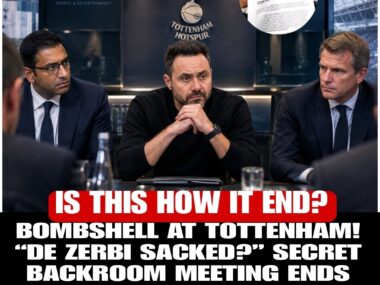
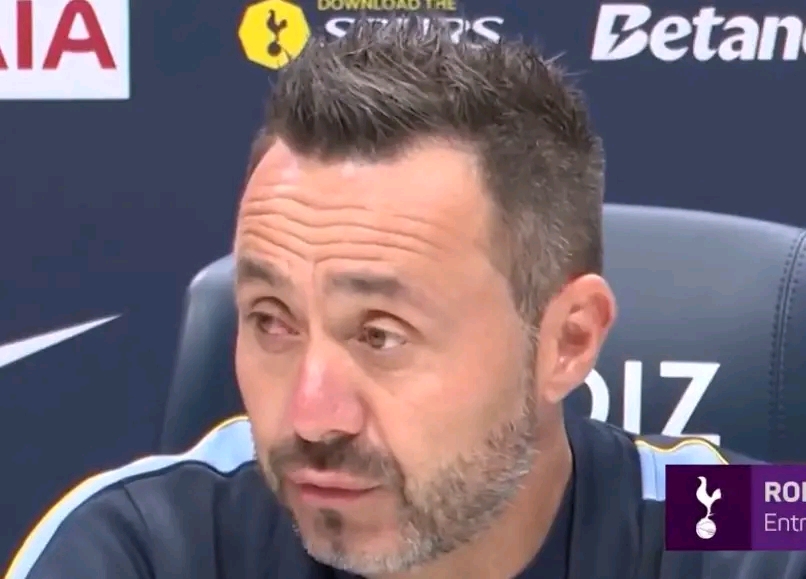
Tottenham Hotspur manager Roberto De Zerbi has responded firmly to questions surrounding Richarlison’s absence from the club’s squad, making it clear that he was not responsible for the decision that left the Brazilian forward out of the team. The Italian coach appeared frustrated when addressing the situation, directing attention towards the club’s senior executives rather than accepting responsibility for a decision he insists was made outside his authority.
The situation involving Richarlison has become a talking point at Tottenham, with questions emerging over why the experienced attacker has been left out of the squad and who should ultimately be held accountable for the decision. De Zerbi’s latest comments have added another layer to the controversy, particularly because they suggest that important decisions concerning the forward’s future were not made by the manager himself.
Speaking about the matter, De Zerbi refused to offer a definitive explanation for Richarlison’s exclusion. Instead, he indicated that those seeking answers should approach Tottenham’s chief executive, Vinai Venkatesham, or sporting director Johan Lange, both of whom occupy senior positions within the club’s leadership structure.
The Spurs manager made his position clear, suggesting that the issue no longer falls within his area of responsibility. His response was direct and left little room for interpretation, as he distanced himself from the decision and pointed towards the executives responsible for overseeing the club’s wider football operations.
De Zerbi’s remarks are particularly significant because managers are generally expected to explain major squad decisions, especially when an established first-team player suddenly finds himself on the outside. Supporters naturally look towards the head coach for clarification, but the Italian has now indicated that he cannot provide the answers they want because he was not involved in making the decision.
The former Brighton manager also acknowledged the enormous pressure that comes with occupying the Tottenham hot seat. According to De Zerbi, taking responsibility for difficult situations is an unavoidable part of being a football manager, even when the circumstances in question are beyond his control.
He explained that coaches are frequently expected to accept criticism and shoulder the consequences of decisions made elsewhere within their organisations. Nevertheless, he appeared determined to establish a distinction between accepting the pressure associated with his position and accepting responsibility for a decision he says he did not make.
That distinction could prove important as the Richarlison situation continues to attract attention. When a player is excluded from a squad, supporters often assume that the manager is directly responsible, whether because of tactical preferences, disciplinary concerns, training performances or disagreements behind the scenes. However, De Zerbi’s comments suggest that the circumstances surrounding the Brazilian’s absence may involve a different level of decision-making at Tottenham.
The Italian was particularly emphatic when addressing his own involvement, insisting that he had played no part in determining the outcome. His statement appeared intended to prevent any misunderstanding about where he stands and to make it clear that he should not automatically be blamed for the forward’s situation.
Although De Zerbi did not provide further details about the reasons behind Richarlison’s exclusion, his refusal to take ownership of the decision is likely to intensify speculation among supporters. Questions remain about whether the matter is connected to the club’s transfer plans, internal discussions or another issue that has yet to be explained publicly. Without additional information from Tottenham, however, the precise circumstances remain unclear.
Another notable aspect of the manager’s response was his willingness to address the possibility of Richarlison speaking publicly about him. De Zerbi indicated that the Brazilian would be free to express his views and made it clear that he had no intention of avoiding a direct conversation.
Rather than suggesting that communication between the pair had completely broken down, the Tottenham boss pointed out that Richarlison knew exactly where he could find him. De Zerbi explained that he regularly spends his working hours at the club’s offices, arriving in the morning and remaining there until the evening.
His message appeared straightforward: if Richarlison wanted to discuss the situation with him personally, there was an opportunity to do so. The manager’s comments conveyed confidence that he was accessible and willing to engage, despite the tension surrounding the forward’s position.
De Zerbi also rejected the suggestion that he had a personal problem with anyone involved. By insisting that he had no issue with any individual, he appeared keen to separate the disagreement over responsibility from any suggestion of a personal feud.
That clarification is important because situations involving squad exclusions can quickly generate rumours of dressing-room divisions, strained relationships and disagreements between players and coaching staff. Nevertheless, De Zerbi’s public comments do not establish that such a conflict exists, and he did not accuse Richarlison of wrongdoing.
Instead, his response focused on the limits of his own involvement and the need for Tottenham’s senior leadership to explain the decision. By naming the club’s chief executive and sporting director, the Italian effectively redirected questions towards the people he believes are better placed to provide an explanation.
For Tottenham, the situation presents a challenge in terms of communication and squad management. When an established forward is left out and the head coach publicly distances himself from the decision, supporters may naturally demand greater clarity from the club. A clear explanation from the appropriate officials could help prevent unnecessary speculation and establish a better understanding of the circumstances.
Richarlison’s position will also remain a subject of interest while questions surrounding his squad status persist. The Brazilian has previously been an important attacking option for Spurs, and any prolonged absence is likely to encourage further discussion about his role, his relationship with the club and what the future might hold.
However, De Zerbi’s remarks should not automatically be interpreted as confirmation of a breakdown between the manager and the player. His statement that he has no problem with anyone suggests that he does not want the situation portrayed as a personal dispute. The central issue, according to his own account, is that he was not responsible for the decision in the first place.
Ultimately, the controversy has raised questions that Tottenham’s leadership may need to address. Why was Richarlison excluded? Who made the final decision? And what does the situation mean for the forward’s future at the club?
For now, De Zerbi has made his position unmistakable. He accepts that the pressure and criticism associated with managing Tottenham come with the job, but he refuses to take responsibility for a decision he says was made without his involvement.
His comments have shifted the focus towards the club’s hierarchy, leaving supporters waiting for further clarification. Whether Tottenham’s executives will publicly explain the circumstances remains to be seen, but the manager’s intervention has ensured that the Richarlison situation will continue to attract attention.
The message from De Zerbi is clear: he is prepared to face the pressure of being Tottenham’s manager, but he wants the people responsible for Richarlison’s exclusion to answer the questions surrounding the decision.

 Alious