 Alious
Tottenham’s struggles this season can’t be pinned solely on refereeing. A revolving door of managers, an injury-ravaged squad, and a dismal run of form are all major factors—and they’re issues the club must own. But the way decisions have consistently gone against Spurs isn’t just unfortunate; it’s becoming a clear pattern.
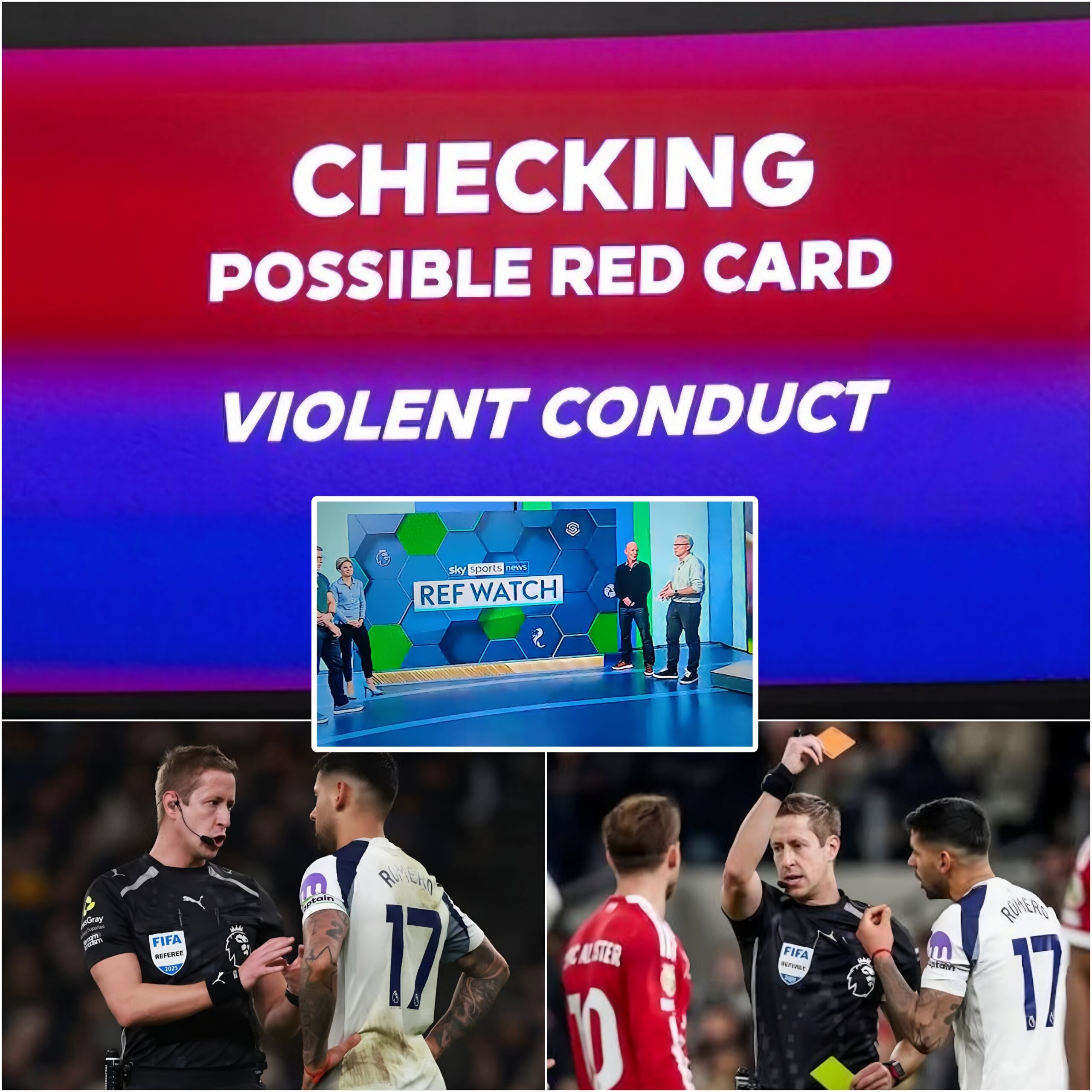
Concerns have been mounting since the opening weeks of the campaign, but they reached a breaking point recently when the Premier League’s Key Match Incidents (KMI) panel confirmed what many supporters already believed: Bryan Brobbey should have been sent off in the 1–0 loss to Sunderland on April 12.
The mistake didn’t just affect that match—it had lasting consequences. Cristian Romero suffered a partial knee ligament injury in the aftermath of that incident, ruling him out for the rest of the season. The panel’s admission came days later, long after the damage was done and the points were lost. As Roberto De Zerbi put it, “Can we play that game again?” The answer, of course, is no.
What makes the situation harder to dismiss is the inconsistency across similar incidents. Spurs have been involved in three nearly identical pushing situations in the box this season, yet each one has been judged differently.
Randal Kolo Muani saw a goal disallowed in the north London derby for a minimal push on Gabriel Magalhaes—contact that former PGMOL chief Keith Hackett believed was exaggerated by the defender. The goal was chalked off.
Just a week later, Raul Jimenez pushed Radu Dragusin in the buildup to Fulham’s goal at Craven Cottage. That one stood, despite Hackett again criticizing the decision and pointing to a shifting, unclear threshold for what constitutes a foul.
Then came the Brobbey incident against Sunderland: a clear two-handed push on Romero that went unpunished, resulting in a season-ending injury for Spurs’ captain. Three similar scenarios, three completely different outcomes.
Naturally, Tottenham sought clarification from PGMOL chief Howard Webb—but received no response. That silence has only deepened frustrations around what appears to be a lack of consistency in officiating standards.
Even in matches where Spurs weren’t directly affected, the inconsistencies remain evident. West Ham’s recent win over Everton featured a controversial moment when a potential handball by Mateus Fernandes went unpunished, despite strong appeals. The decision had major implications in the relegation battle, yet it stood in contrast to earlier calls—like the one against Kolo Muani—that seemed to require far less to overturn.
Add to that incidents like Andre avoiding a red card challenge on Yves Bissouma—one that many believe would have seen Romero sent off without hesitation—and the sense of imbalance grows stronger. While occasional mistakes are part of the game, Spurs have seen little benefit from them. They’ve yet to be awarded a penalty all season, and decisions involving red cards have rarely gone in their favor.
The bigger picture only reinforces the concern. By the end of March, there had been 58 recorded KMI errors this season, compared to 44 across the entirety of the previous campaign. And those mistakes don’t appear to be evenly shared.
For Tottenham, the impact has been tangible: a legitimate goal ruled out against Arsenal, an illegitimate goal allowed for Fulham, and a missed red card against Sunderland that not only cost them a match but also their captain. If even a couple of those decisions had gone the other way, Spurs might not be fighting relegation at all.
That’s not speculation—it’s a straightforward reflection of how costly inconsistency can be. And it’s why frustration among Tottenham supporters continues to grow.


 Alious