 Alious
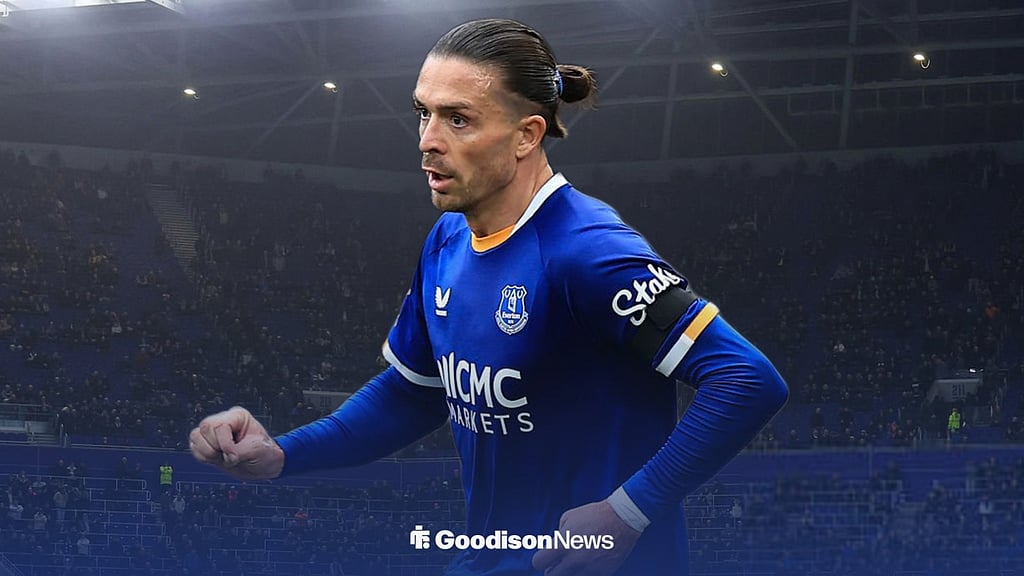
Jack Grealish has delivered a frank assessment of Everton’s disappointing defeat to Chelsea, admitting that the team’s performance after the interval fell well below the required standard while thanking supporters for continuing to stand behind the club.
The England international has increasingly become an important voice within the Everton dressing room since arriving on loan from Manchester City. His experience, personality and willingness to speak openly have helped him emerge as one of the players supporters look towards during difficult moments.
However, his latest spell at Hill Dickinson Stadium has not been entirely straightforward. After enjoying a promising start to life under David Moyes, Grealish suffered an injury in January that brought his campaign to an abrupt halt.
His return for another loan spell was expected to provide him with an opportunity to rebuild his momentum, enjoy regular playing time and rediscover the form that once made him one of the Premier League’s most exciting attacking players.
Unfortunately, Everton’s latest setback against Chelsea has created another difficult moment, with the performance and several contentious refereeing decisions generating considerable discussion among supporters.
Grealish Delivers Honest Verdict Following Chelsea Setback
Grealish was once again included in Everton’s starting lineup for their meeting with Chelsea, playing for approximately 85 minutes before being substituted.
Brennan Johnson was introduced in his place as Moyes attempted to make changes, although the Wales international has yet to find his best form since arriving at the club.
The contest remained goalless at half-time, leaving Everton with a realistic opportunity to challenge their opponents and potentially secure a positive result.
However, Chelsea took control shortly after the restart when Pedro Neto found the net, putting the visitors ahead and leaving Everton with an uphill battle.
Neto subsequently struck again towards the closing stages, completing his brace and ensuring that Chelsea left Merseyside with all three points.
The result was particularly disappointing for Everton, who had hoped to produce a stronger performance in front of their home supporters.
Grealish was clearly dissatisfied with how his team performed during the second half and decided to express his feelings through Instagram Stories on Sunday.
Reflecting on the disappointing display, the midfielder admitted that Everton had failed to reach the required level after the break. He also acknowledged the continued encouragement provided by the club’s supporters.
His message conveyed two important points: frustration with the team’s performance and appreciation for the fans who continued backing Everton despite another disappointing afternoon.
Rather than attempting to disguise the problems, Grealish made it clear that the second-half display was not good enough.
His comments will likely resonate with supporters who expected Everton to show greater determination, attacking quality and composure when the match was still within their reach.
Controversial Officiating Decisions Add to Everton’s Frustration
Although Chelsea ultimately secured victory through Neto’s two goals, the match was also overshadowed by several refereeing incidents that attracted criticism from players, supporters and coaching staff.
One of the earliest flashpoints involved Harrison Armstrong, who received a yellow card following a sliding challenge that some observers considered a routine attempt to win the ball.
That decision immediately generated questions about the referee’s interpretation of the incident and the threshold being applied to challenges during the contest.
However, the debate intensified when Morgan Rogers appeared to escape further punishment following a challenge involving James Garner.
Rogers was already on a yellow card, making the incident particularly significant because another booking would have resulted in his dismissal.
Critics argued that the challenge deserved closer scrutiny, claiming that Rogers made dangerous contact with Garner’s shin while his studs were raised.
Others defended the officials, suggesting that Garner’s own challenge and the circumstances surrounding the collision needed to be considered before reaching a definitive conclusion.
Nevertheless, those questioning the decision argued that the nature of Garner’s challenge did not automatically excuse any dangerous contact made by his opponent.
The disagreement quickly became one of the major talking points surrounding the match, with Everton supporters questioning whether the same disciplinary standards were being applied consistently to both teams.
Cole Palmer Also Involved in Disciplinary Debate
The controversy did not end with the incident involving Rogers and Garner.
Cole Palmer also received a yellow card during the match, adding another layer to the discussion about how the referee managed disciplinary matters.
Some observers felt that the officials became increasingly reluctant to issue further punishments after the initial bookings, creating uncertainty about where the line had been drawn for subsequent challenges.
Such situations often generate frustration because footballers and supporters expect referees to apply the laws consistently throughout the entire contest.
When players appear to escape punishment for incidents that look similar to previously sanctioned challenges, questions naturally arise about whether the officials are judging each situation according to the same criteria.
However, it is important to recognise that individual challenges can differ in their severity, timing and circumstances. A yellow card in one situation does not automatically mean another player must receive the same punishment.
The central issue for critics is whether the referee assessed each incident appropriately and maintained a consistent approach to player safety and disciplinary decisions.
For Everton, those questions have added to the disappointment of losing a match in which they had hoped to achieve a better result.
Why Consistency Remains a Major Issue in the Premier League
The debate surrounding Everton’s defeat highlights a familiar frustration across English football: the demand for greater consistency in refereeing decisions.
Supporters understand that officials cannot make every decision perfectly, particularly in a fast-moving sport where challenges happen within fractions of a second.
Nevertheless, the introduction of video assistant refereeing was intended to provide additional support in key situations and help reduce the impact of significant officiating errors.
When controversial incidents continue to dominate post-match discussions, questions naturally emerge about whether the existing procedures are achieving their intended purpose.
For Everton fans, the disappointment is compounded by the fact that their team also struggled to deliver the performance required to challenge Chelsea effectively after half-time.
The two issues should be considered separately. Questionable refereeing decisions do not automatically explain a defeat, just as a poor team performance does not remove the importance of fair and consistent officiating.
Grealish’s own assessment focused on Everton’s second-half display, suggesting that the players recognised they needed to improve regardless of the surrounding controversy.
That acknowledgement may be important as Moyes looks to ensure that frustration over the result does not distract the squad from addressing its shortcomings.
Everton Must Respond Rather Than Dwell on the Defeat
For Grealish, the immediate priority will be helping Everton regain their confidence and produce a more convincing performance in their next fixture.
The midfielder returned to Merseyside hoping to enjoy an uninterrupted run of football after injury disrupted his previous campaign. He will now be eager to build consistency and help Everton become more effective in attacking areas.
His public message also demonstrated an awareness of the supporters’ disappointment. By thanking them for their continued backing, Grealish recognised the importance of maintaining


 Alious