 Alious
Tottenham Hotspur finally had something to celebrate after securing a vital 3-1 victory over Coventry City on Monday night. The result brought an end to their frustrating run without a Premier League win, while Dejan Kulusevski also made a long-awaited return from injury after spending 526 days on the sidelines. However, despite the encouraging developments, one performance raised an important question about the future of Spurs’ attacking play.
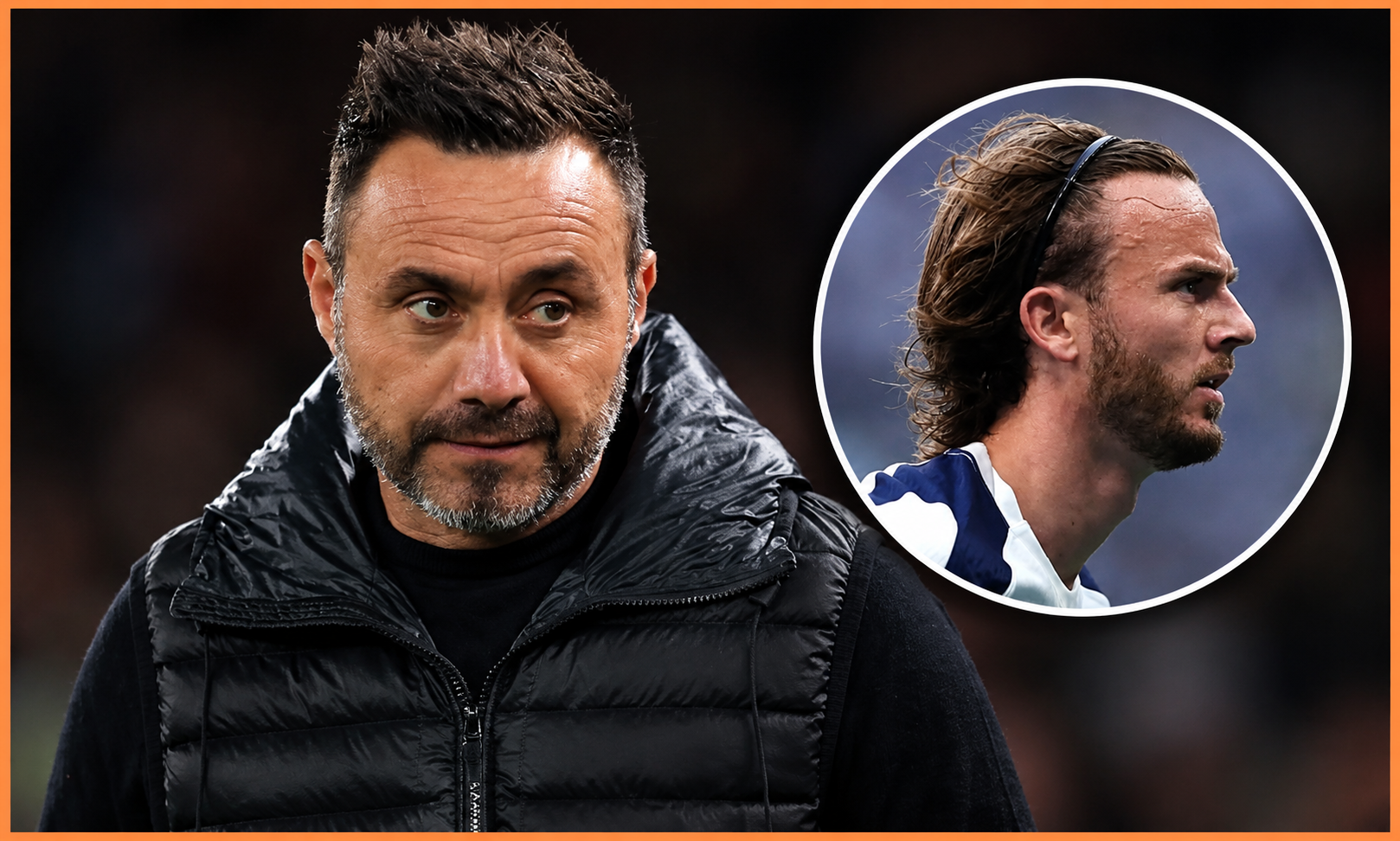
James Maddison produced a sensational goal that immediately attracted attention, delivering a moment of individual brilliance that helped underline his importance to the team. His spectacular effort was undoubtedly one of the standout moments of the match and could emerge as one of the finest goals of the season.
Yet, beneath the excitement surrounding Tottenham’s victory, there remains a significant concern. Spurs needed an extraordinary piece of individual quality to make their performance look more convincing, despite facing a Coventry side that has struggled defensively. For all the celebrations at the final whistle, the underlying statistics suggest that Tottenham still have considerable work to do before they can consistently trouble Premier League opponents.
Tottenham’s Victory Does Not Erase Their Attacking Problems
Following the celebrations, manager Roberto De Zerbi must carefully examine what his players produced against Coventry. Although the three points were important, the overall attacking performance offered limited evidence that Tottenham have completely solved their problems in the final third.
Before the match, Spurs ranked 18th in the Premier League for expected goals per 90 minutes, averaging slightly more than 1.00 expected goals. Their performance against Coventry did little to improve that assessment. Instead, their expected-goals average declined following a match in which they registered just 0.86 xG.
Expected goals, commonly abbreviated as xG, measure the quality of scoring opportunities created by a team. The statistic considers factors such as the location of a shot, the angle, the type of attempt and other circumstances surrounding the opportunity.
Although xG cannot explain every aspect of a football match, it can provide valuable insight into whether a team is regularly creating promising chances.
For Tottenham, the figures suggest that their attacking play remains a serious concern.
The most striking example came from Maddison’s spectacular goal. Despite the quality of the finish, the opportunity carried an expected-goals value of only 0.05, indicating that it was a difficult chance to convert.
Omar Marmoush also found the net, ending his wait for a goal, but his effort similarly registered an xG value of approximately 0.05.
Both players deserve credit for converting difficult opportunities. However, their goals also illustrate the difference between producing moments of individual excellence and building a reliable attacking system.
Tottenham cannot reasonably expect their players to score exceptional goals from low-probability situations every week. If they want to compete consistently against stronger opponents, they must develop a more dependable method of creating clear-cut chances.
Spurs Continue to Struggle Against Organised Defences
One of the most frustrating aspects of Tottenham’s attacking performance was their difficulty finding a direct route towards goal.
Spurs frequently moved the ball around the edge of Coventry’s penalty area without creating enough opportunities to threaten the opposition goalkeeper. Their possession often looked promising, but the final pass, movement or attacking decision failed to produce the breakthrough they needed.
This has become an important issue for De Zerbi to address.
Possession football can be effective when players use it to manipulate defensive structures, create spaces and deliver passes that expose weaknesses. However, circulating the ball without making meaningful progress can allow opponents to remain comfortable and organised.
Tottenham appeared to encounter precisely that problem.
They attempted to stretch the opposition by playing longer passes more frequently, with Dominic Solanke working hard to chase balls into advanced areas. Nevertheless, winning the initial pass was only part of the challenge.
Spurs also needed to secure the second ball, maintain possession in dangerous areas and quickly turn those situations into attacking opportunities.
Too often, they struggled to establish control after the first contest.
Without that second phase of possession, long passes can become isolated efforts rather than an effective attacking strategy. The opposition can simply recover the ball, reorganise and force Tottenham to start again.
The concern is not necessarily that Spurs lack talented attackers. Instead, it is whether their current approach consistently places those players in positions where they can make the greatest impact.
Against Coventry, Tottenham’s attacking limitations remained visible even as the final score suggested a comfortable victory.
Tottenham Cannot Blame Everything on Bad Luck
Another important consideration is whether Tottenham’s disappointing attacking numbers are the result of poor finishing or a deeper structural problem.
The available figures suggest that bad luck alone cannot explain their difficulties.
According to the analysis, Spurs had underperformed their expected goals by only 0.21 before the victory, a relatively small difference compared with their broader attacking concerns.
In other words, Tottenham have not simply been creating numerous excellent opportunities and failing to convert them. Their problem is also the quality and frequency of the chances they produce.
That distinction matters.
A team that regularly creates high-quality opportunities but struggles to score may benefit from improved finishing, greater confidence or a change in personnel. A team that rarely creates those opportunities must address its attacking structure as well.
Following their victory over Coventry, Tottenham moved up to 16th in the Premier League standings. Their expected-points performance, however, suggested that they were closer to 12th place.
Neither position reflects the level of ambition associated with a club hoping to compete for European qualification.
Tottenham still have time to improve their position, but the victory should not distract the coaching staff from the work required to make their attacking play more consistent.
Three points are valuable. A sustainable attacking system is even more important over the course of a long season.
James Maddison Has the Creativity Tottenham Need
Despite the concerns surrounding Tottenham’s overall performance, Maddison’s contribution demonstrated why he remains such an important player.
The midfielder possesses the technical ability, imagination and confidence to produce something special when conventional attacking moves fail.
His goal against Coventry was an excellent example of the qualities he brings to the team. When Tottenham struggled to find a breakthrough through their usual patterns of play, Maddison delivered a moment of individual brilliance that changed the atmosphere around the match.
That ability can make a significant difference during a demanding campaign.
Strong teams need players who can unlock stubborn defences, recognise opportunities that others miss and create something from seemingly unpromising situations. These moments can decide matches in which tactical plans fail to produce the desired result.
Maddison has the potential to fulfil that role for Tottenham.
However, his greatest value extends beyond his goalscoring.
He can identify forward passing opportunities, connect midfield with attack, deliver creative passes between defensive lines and help attacking players receive the ball in more dangerous positions.
These qualities are particularly important for a Tottenham side that has struggled to create clear chances through sustained possession.
When Maddison operates effectively as an attacking midfielder, Spurs have a player capable of dictating the tempo in advanced areas and giving their forwards the service they need.
Unfortunately, his availability remains a major concern.
The Injury Problem That Could Undermine Tottenham’s Plans
Maddison’s talent is not in question. His fitness, however, presents a difficult challenge for De Zerbi.
The midfielder has endured a prolonged period of injury problems, and Tottenham cannot build their entire attacking strategy around the assumption that he will remain available for every important match.
His performance against Coventry demonstrated what the team can gain from having him on the pitch. At the same time, his limited playing time highlighted the risk of depending too heavily on a player whose recent career has been disrupted by injuries.
Maddison did not complete the full match. He was substituted in the 69th minute, with Conor Gallagher coming on in his place.
Gallagher offers valuable qualities, including energy, pressing ability and work rate. However, his natural strengths are different from Maddison’s creative qualities in the number 10 position.
Expecting Gallagher to provide an identical attacking influence would therefore be unrealistic.
The substitution highlighted a wider problem: Tottenham currently appear to have limited like-for-like alternatives capable of delivering the same combination of vision, passing range and attacking imagination.
A player cannot influence a match from the treatment room. Even the most talented footballer needs regular minutes to make a consistent difference.
That is why Maddison’s fitness could become one of the defining factors in Tottenham’s campaign.
If he remains available and builds his match fitness, Spurs could benefit enormously from his creativity. If his involvement continues to be interrupted, De Zerbi will need another reliable solution.
Why Tottenham Need a Better Number 10 Option
The attacking midfield position has become an increasingly important issue for Tottenham.
A specialist number 10 can provide the link between the central midfielders and the forwards, helping a team progress through the middle rather than relying exclusively on wide attacks or long passes.
The role requires more than technical ability. Players must recognise spaces, make quick decisions, deliver accurate passes and understand when to accelerate an attack.
Maddison possesses many of those attributes.
His ability to receive the ball between opposition lines and find teammates in advanced positions could help Tottenham become more dangerous in possession. He can also threaten the goal himself, forcing defenders to consider more than one potential danger.
Without a comparable alternative, however, Tottenham risk becoming predictable whenever Maddison is unavailable or needs to be substituted.
Opponents can concentrate on restricting his influence, knowing that the players replacing him may offer a different style of threat.
This is where De Zerbi must begin considering alternative solutions.
One possibility is to explore the transfer market for another creative midfielder who can provide competition and cover. A suitable signing would give Tottenham greater flexibility and reduce the pressure on Maddison to play every minute.
Another option involves developing younger players already at the club.
Luca Williams-Barnett could become part of that conversation if he convinces De Zerbi that he is ready to contribute at senior level. Giving a young player opportunities would carry some risk, but it could also help Tottenham develop an additional source of creativity.
The important point is that the club cannot afford to ignore the issue.
A successful team needs more than one route to goal, and Tottenham must establish a plan that remains effective even when their first-choice attacking midfielder is unavailable.
Sandro Tonali and Archie Gray Could Help Create the Right Balance
There is also an opportunity for Tottenham to improve their midfield balance by building around Maddison’s creative strengths.
With players such as Sandro Tonali and Archie Gray providing defensive discipline and energy, the team could potentially give its attacking midfielder greater freedom to concentrate on creating opportunities.
The idea would be to establish a midfield structure in which defensive responsibilities are shared effectively, allowing Maddison to operate in advanced positions without constantly being pulled away from his primary role.
Such a system would still require careful tactical planning.
Maddison cannot simply be released from all defensive duties, particularly against opponents who are capable of exploiting spaces in midfield. Instead, Tottenham need a structure that allows him to contribute creatively while ensuring the team remains compact when possession is lost.
If De Zerbi can achieve that balance, Spurs may become more effective in the final third.
However, the plan depends heavily on the players remaining available and the tactical arrangement functioning as intended.
It would be dangerous to assume that the presence of talented midfielders automatically guarantees an effective attacking system.
The manager must ensure that their individual strengths complement one another and translate into better performances across the team.
De Zerbi Must Prepare an Alternative Plan
Tottenham’s victory over Coventry provided a welcome boost, but it also created an opportunity for De Zerbi to examine the weaknesses that remain beneath the positive result.
Maddison’s stunning goal demonstrated the importance of creativity and individual quality. Yet it also highlighted how much Tottenham currently depend on moments that may be difficult to reproduce consistently.
The manager must now determine how to make his side more productive in attack.
That means improving movement around the penalty area, finding more effective ways to break down organised defences and ensuring that long passes lead to controlled possession rather than isolated attacks.
It also means addressing the number 10 position before injuries or suspensions expose the lack of suitable alternatives.
Maddison could be central to Tottenham’s recovery, but the club must be realistic about his fitness history. Expecting him to play approximately 80 minutes in every match may be an understandable ambition, yet it cannot serve as the only solution to their creative problems.
A more sustainable approach would combine careful management of Maddison’s minutes with the development of another attacking option.
That would allow Tottenham to benefit from his exceptional qualities without making their entire offensive strategy dependent on his availability.
Final Verdict: A Brilliant Goal, but a Bigger Problem Remains
Tottenham deserved to celebrate their 3-1 victory over Coventry City. Ending their frustrating run without a league win and welcoming Kulusevski back after a lengthy absence were significant positives.
Maddison’s spectacular strike added another memorable moment to the occasion.
Nevertheless, one outstanding goal cannot erase the questions surrounding Tottenham’s attacking performance.
Their low expected-goals output, difficulty creating clear chances and limited alternatives in the number 10 role all suggest that De Zerbi still has important decisions to make.
Maddison possesses the creativity and individual brilliance to transform matches, but his injury record makes it risky to depend on him as the team’s only dependable source of inspiration.
Tottenham need to create more opportunities through their collective play rather than repeatedly relying on exceptional finishes to rescue difficult situations.
The victory over Coventry may represent a turning point, but maintaining that momentum will require more than moments of magic.
For De Zerbi, the challenge is clear: build an attack that can function consistently with Maddison, while ensuring Tottenham have a credible alternative when their most creative midfielder is unavailable.

 Alious